- About
- Our technology
- Virtual lab
- Clinical trials
- Research team
- Key publications
- Gallery
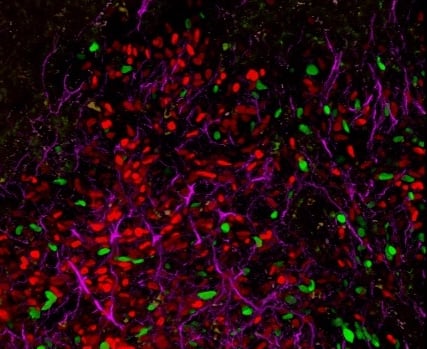
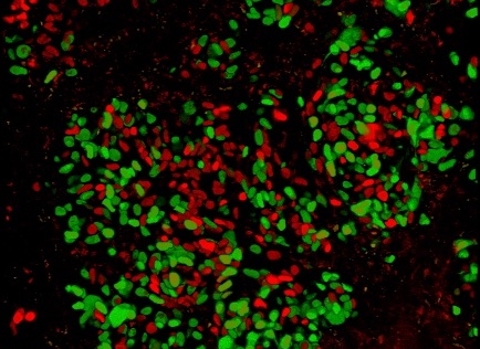
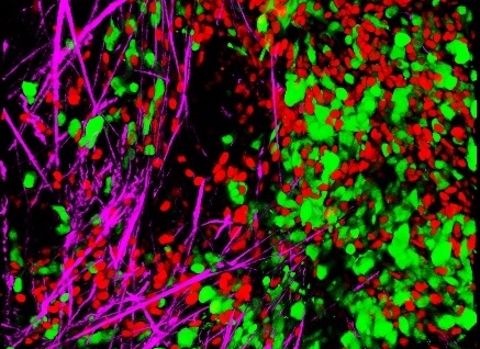
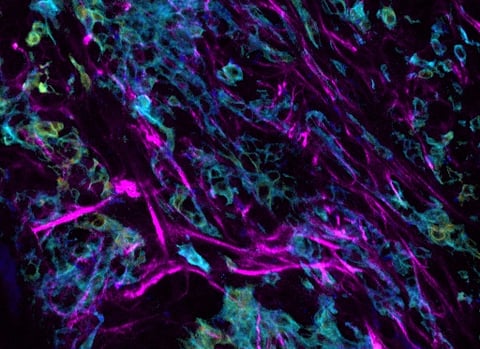
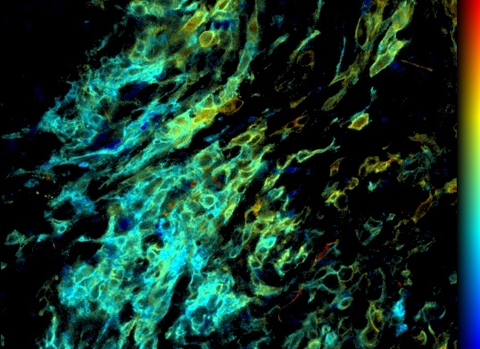
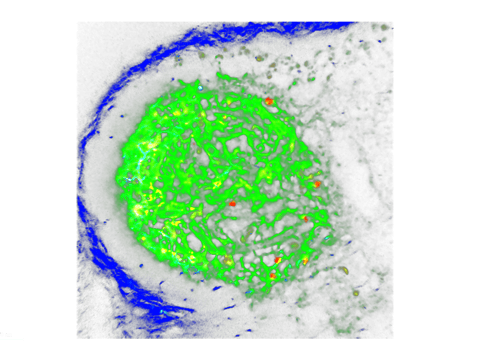
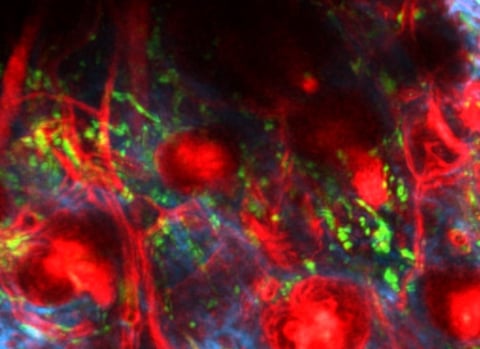
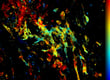
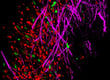
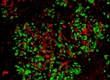
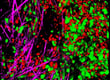
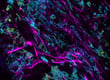
The ACRF-funded Intravital Imaging of Niches for Cancer Immune Therapy (INCITe) Centre is a cross-disciplinary collaboration of cancer biologists, immunologists, clinicians and world-class experts in physics and engineering. Together, we have pioneered the development of intravital imaging technology, which allows researchers to observe the immune system fighting cancer, in real time and at a molecular level.
Our goal is to revolutionise the treatment of all cancers by transforming the future of intravital imaging: 5 x faster. 5 x brighter. 5 x deeper.
While based at the Garvan Institute, the INCITe Centre operates as part of an Australia-wide network with our strategic partners at the Australian National University (Canberra), the University of Technology Sydney, QIMR Berghofer Medical Research Institute (Brisbane), the Olivia Newton-John Cancer Research Institute (Melbourne), the Harry Perkins Institute of Medical Research (Perth) and the Centre for Cancer Biology (Adelaide). The establishment of the INCITe Centre was made possible thanks to a $3 million grant from the Australian Cancer Research Foundation (ACRF).
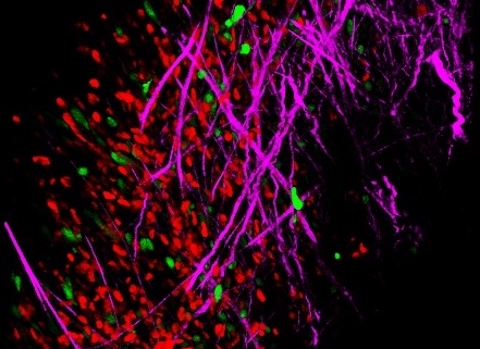
Our Centre houses four next-generation microscopes including the Molecular NICHEscopes and the EndoNICHEscopes. Using these microscopes, we can identify cancer and immune cells in previously inaccessible regions, like deep inside bone, and observe signalling between live tumour cells and immune cells. This allows us to study in unprecedented detail how drug-resistant, dormant cancer cells develop and interact with the immune system. These insights help us identify new therapeutic targets to eradicate cancer, translating research into improved patient outcomes.
Our holistic approach targets both the cancer cell and the extrinsic environment in which it resides. Cancer cells, stromal cells, the extracellular matrix (ECM) and immune cells all interact as part of a dynamic ecosystem. We believe that meaningful insights can only be yielded when this ecosystem is simultaneously examined through the lenses of both cancer and immunology. The benefits of exploring cellular dynamics in cancer cell niches, in vivo and in real time, have driven us to develop new microscopes that make deep tissue imaging possible.
Our team has pioneered the development of intravital imaging technology – a microscope technique with the ability to look directly into living tissues in real time. This offers the exciting prospect of studying the complex cancer–immune cell ecosystem in toto for the first time.
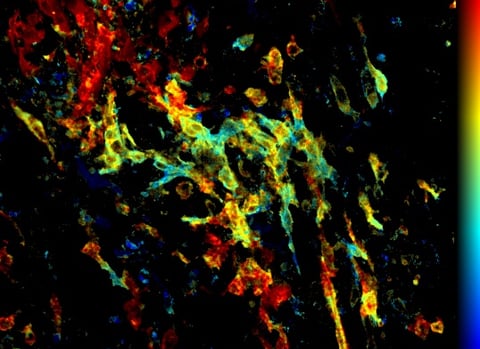
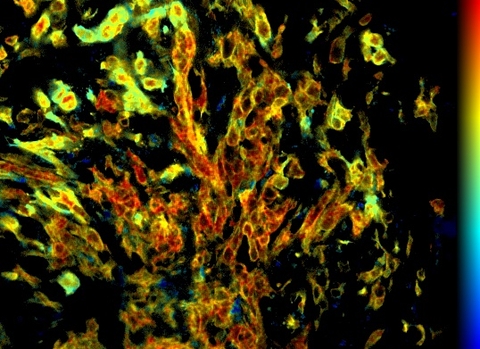
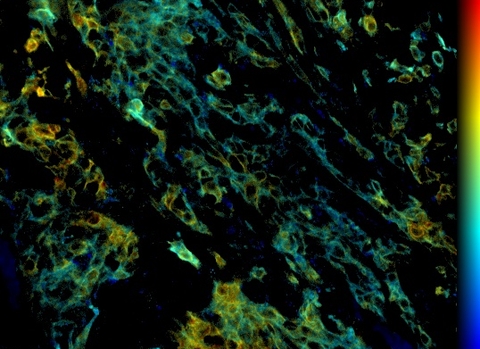
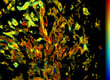
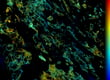
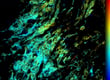
Our NICHEscopes are the next generation of intravital two-photon microscopes, explicitly designed to image cancer–immune cell interactions in their native microenvironment. We have built different and complementary types of NICHEscopes to achieve two specific objectives: (1) a revolutionary Raster Adaptive Optics (RAO) module to image deeper and (2) fast fluorescence lifetime imaging technology for in vivo molecular interactions. Together, these two bespoke NICHEscopes enable multimodal, multiscale imaging of deep tissues that has not previously been possible.
The NICHEscopes housed at the INCITe Centre at the Garvan Institute are available to cancer researchers across Australia. The Centre includes dedicated image analysis facilities and an innovative shared virtual lab environment, providing investigators at partner organisations with remote access to imaging work stations and training. Workstations loaded with Imaris analysis software licences allow researchers to share data in real time, regardless of where they are located. This allows the Australian research community to crowdsource experiments, access and analyse data, and leverage a wider research network from within their host organisations. In addition to this, we will investigate the use of augmented reality technologies for the remote operation of our microscopes.
For more information about our technology, or to discuss accessing it to support your research, please email incite@garvan.org.au.
We leverage the national precision oncology trials platform Omico and the Molecular Screening and Therapeutics trial (MoST), which use genomics and other molecular screening tools to identify patients for therapeutic trials, including immunotherapies. MoST is a key part of a program which will screen more than 8,000 Australians with advanced cancer via 15 cancer centres nationally, and enter more than 600 into promising therapeutic trials. Led by Professor Thomas and Professor John Simes (NHMRC Clinical Trials Centre), a core objective of MoST is accelerating promising wet lab research to clinical translation. Using the ACRF INCITe Centre and our capacity to monitor the tumour microenvironment and fibrosis, we are running two anti-fibrotic clinical trials via MOST-P, to improve outcomes for patients with pancreatic cancer. This is coupled with our ongoing industrial collaborations to translate our non-genomic work from bench-to-bedside via Amplia therapeutics, using anti-fibrotic targeting in cancer.
Co-Directors

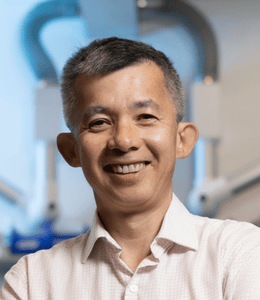
Professor Tri Phan
Program Director - Precision Immunology / Laboratory HeadView ProfileProfessor Paul Timpson
Program Director - Cancer Ecosystems / Laboratory HeadView Profile

Researchers
Professor Marina Pajic
Laboratory HeadView ProfileDr Angela Fontaine-Titley
Microscopy OfficerView ProfileDr Deborah Barkauskas
Head of Imaging PlatformView Profile



Selected publications
See all publications- PUBLISHED 11 May 2026Nature Communications
Endocrine therapy reprogramming of breast cancer facilitates metastatic escape via upregulation of P-Rex1/Rac1 signalling
- PUBLISHED 12 March 2025Science Advances
Targeting the NPY/NPY1R signaling axis in mutant p53-dependent pancreatic cancer impairs metastasis
- PUBLISHED 3 July 2024Science Advances
Temporally resolved proteomics identifies nidogen-2 as a cotarget in pancreatic cancer that modulates fibrosis and therapy response
- PUBLISHED 26 April 2023Science Advances
Monitoring AKT activity and targeting in live tissue and disease contexts using a real-time Akt-FRET biosensor mouse
- PUBLISHED 2 March 2023Cell
Apoptotic cell fragments locally activate tingible body macrophages in the germinal center