
- About
- Team
- Focus areas
- Capabilities
- Collaboration and partners
- Publications
Powering up the immune system’s cells
A functioning immune system is critical to a healthy productive life. Vaccine-preventable infectious disease, allergy and autoimmunity pose a significant global health challenge. The COVID-19 pandemic has killed millions worldwide; allergies affect one in five Australians; and people with autoimmune diseases are burdened with chronic disability and ill health.
Our program seeks to make discoveries that will improve the diagnosis and treatment of autoimmune diseases, super-charge the immune response to vaccination, and transform the management of allergic diseases including anaphylaxis.
Our quest is powered by pioneering state-of-the-art technologies including single-cell analysis and clonal tracking, intravital imaging, gene editing and in vivo preclinical disease models.
We partner closely with colleagues including St Vincent’s Hospital, Sydney, St Vincent’s Centre for Applied Medical Research, along with UNSW Sydney School of Biomedical Sciences, UNSW School of Biotechnology and Biomolecular Sciences, the Kirby Institute, hospitals and Local Health Districts in Sydney and beyond.
Our aim is to develop new diagnostic approaches and more effective precision treatments that will change clinical practice and improve health outcomes in Australia and around the world.
A new collaborative way of working
We are maximising the potential of our Program’s world-leading experts in the field of B and T cells, humoral immunity, autoimmunity, immunogenomics, innate immunity, primary immunodeficiency diseases and cancer immunology. We are building a network of consumer advocates and clinicians to inform and co-design our research to ensure we place the patient and treating clinicians front and centre of our mission.
By rallying researchers, clinicians, consumers and other partners we will realise our vision to transform the diagnosis and treatment of diseases affecting the immune system.
Contact the Precision Immunology Program (PIP)
PIP@garvan.org.auProgram Directors
 Associate Professor Elissa Deenick
Associate Professor Deenick is head of the Lymphocyte Signalling and Activation Lab, a Scientia Associate Professor at UNSW Sydney, and an NHMRC Investigator Grant recipient. She is an expert on the regulation of T and B cell activation and function and how this contributes to the pathology of human immune disease.
- Professor Tri Phan
Professor Phan is head of the Intravital Imaging and Gene Expression Lab, and Conjoint Professor at UNSW Sydney, and an NHMRC Investigator Grant recipient. He is also a clinician-scientist at the leading edge of research, translating the mechanisms underpinning immunity, autoimmunity and cancer to the clinic.

Program Faculty
- Professor Cindy Ma
Professor Ma is head of the Human Immune Disorders laboratory at the Garvan Institute, a Conjoint Professor at UNSW Sydney, and an NHMRC Investigator Grant recipient. Her expertise in human immunology and inborn errors of immunity (IEI) have led to the elucidation of molecular requirements for a functioning immune system and discovery of mechanisms underlying the clinical features of IEI, including atopic disease.
- Dr Philipp Rommel
Dr Philipp Rommel is a cancer researcher who engineers “smart” immune cells to treat blood and solid cancers. He leads the Rommel Lab within Garvan’s Precision Immunology Program, where his team is developing the next generation of CAR T-cell therapy – a treatment that reprograms a patient’s own immune cells to recognise and attack cancer.
- Dr Ksenia Skvortsova
Dr Ksenia Skvortsova is the head of the Developmental and Disease Epigenomics Laboratory at the Garvan Institute and an NHMRC Investigator Fellow. She has led major interdisciplinary projects that have resulted in the discovery of chromatin signatures that regulate DNA methylation landscapes in healthy tissues and their remodelling in cancer and immune pathologies, and the discovery of the evolution of epigenome remodelling in vertebrate and invertebrate embryonic development.
- Dr Carlson Tsui
Dr Carlson Tsui is a lymphocyte biologist investigating the mechanisms that sustain long-term T cell immunity against cancer and chronic viral infections. Since establishing his lab at Garvan in March 2026, Dr Tsui has focused on the regulation of T cell ‘exhaustion’ – a state where immune cells lose their ability to clear pathogens and cancer from the body. His research seeks to answer the question: how can we revitalise these cells to improve immunotherapy outcomes?
- Dr Seyhan Yazar
Dr Yazar leads the Systems Immunology Group within the Lymphocyte Signalling and Activation Lab, and a conjoint senior lecturer at UNSW Sydney. She is an early career researcher and emerging leader in computational biology with expertise in complex disease genetics. Dr Yazar uses a multidisciplinary approach to answering research questions including bioinformatics, biostatistics, statistical genetics, and epidemiology.





Program Manager
- Dr Kamila MarzecProgram Manager

Key Garvan collaborators
- Professor Robert BrinkProgram Director - Immune Biotherapies / Laboratory Head
- Professor Christopher GoodnowLaboratory Head
- Dr Katherine JacksonSenior Research Officer
- Professor Peter CroucherProgram Director - Cancer Plasticity & Dormancy / Laboratory Head
- Associate Professor Christine ChafferProgram Director - Cancer Plasticity & Dormancy / Laboratory Head
- Professor Antony BastenEmeritus Fellow
- Professor Jonathan SprentEmeritus Fellow
- Associate Professor Owen SiggsLaboratory Head
- Leonard GoldsteinHead - Data Science Platform
- Professor Sarah KummerfeldChief Scientific Officer
- Mary-Anne YoungHead of Clinical Engagement and Translational Platform
- Professor Paul TimpsonProgram Director - Cancer Ecosystems / Laboratory Head
- Professor Joseph PowellProgram Director - Translational Genomics / Director Garvan-Weizmann Centre For Cellular Genomics


Key external collaborators - St Vincent’s Hospital Sydney network
Dr Jennifer Massey
Staff Specialist Neurologist, expertise in multiple sclerosis and complex neuroimmunological disordersDr Alisa Kane
Head of Immunology Department, expertise in primary immunodeficiency disordersDr Kate O’Connor
Staff Specialist Allergist, expertise in allergy immune therapiesAssociate Professor John Zaunders
Senior Scientist, expertise in T cell biologyAssociate Professor Phil Cunningham
Deputy Executive Director of Research at St Vincent’s Health Network, expertise in public health surveillance of populations at risk of HIV and other sexually transmitted diseases


Key external collaborators - UNSW Sydney
Professor Kathy Petoumenos
Expertise in HIV-AIDS, epidemiology, biostatistics, infectious diseasesDr Sara Ballouz
Expertise in transcriptomics (single-cell and bulk), co-expression, x-linked disorders, sex differences in disease, and metaanalysisDr Mee Ling Munier
Expertise in immunovirologyProfessor Anthony Kelleher
Expertise in immunovirology and clinical medicine


Key external collaborators - Sydney Hospitals
Associate Professor Peter Hsu (Children’s Hospital at Westmead)
Paediatric Clinical Allergist and ImmunologistProfessor Ralph Nanan (Nepean Hospital)
Paediatric Clinical Allergist and ImmunologistProfessor Paul Middleton (Liverpool Hospital)
Expertise in Electronic Health RecordsDr Jim Basilakis (Liverpool Hospital)
Expertise in Electronic Health Records


Key external collaborators - International
Professor Nicholas Schwab (University of Münster, Germany)
Neuroimmunologist, expertise in EBV and autoimmunity focusing on T cells and CNS resident immune cells, and anti-EBV T cell responsesProfessor Scott Boyd (Stanford University, USA)
Expertise in B cell responses to virusesProfessor Alan Rickinson (University of Birmingham, UK)
Expertise in EBV


The Precision Immunology Program has a vision to transform the diagnosis and treatment of diseases affecting the immune system by understanding their causes and mechanisms, not just the symptoms.
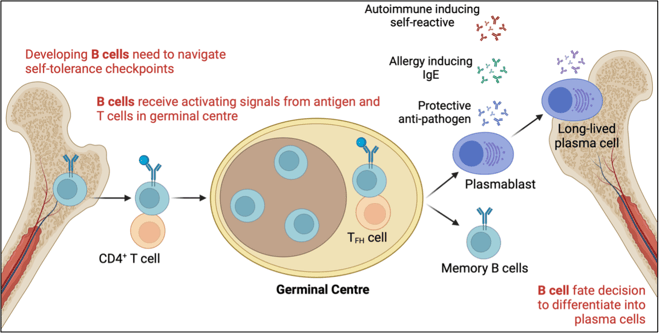
The Precision Immunology Program aims to address the impact caused by a dysfunctional immune system by reframing understanding of the immune system in health and disease. Our Program will leverage knowledge gains to develop new diagnostic approaches and more effective precision treatments that will change clinical practice and improve outcomes in Australia and around the world.
Our Program works closely with clinical researchers to collect and analyse valuable patient samples that will help answer the major questions in autoimmune diseases, allergy and immune deficiency disorders.
Understanding the molecular drivers of allergy
Allergy occurs when a person’s immune system reacts to substances in the environment that are harmless to most people. These substances are known as allergens and can be found in dust mites, pets, pollen, ticks, moulds, foods, and some medications.
Allergic disease is a common illness, affecting at least one in five Australians. Australia has one of the highest rates of food allergy in the world, affecting one in 10 infants and the rate is still on the rise. There is an urgent need for high quality research into the causes and treatments of IgE-mediated allergic diseases to personalise and improve patient care.
Our Program has a particular interest in solving childhood allergies by delving into the developmental origin of health and disease. Together with our collaborators in the Sydney Children’s Hospital Network, we are focusing on illnesses such as eczema (an itchy skin condition), FPIES (a delayed non-IgE mediated gut allergic reaction to food/s), and other allergies against environmental and food-based allergens. Our access to valuable biobanked samples, expertise in B cells, antibody class switching to IgE and single cell genomic technologies ideally positions us to make breakthroughs in understanding an individual’s molecular drivers that lead to their allergy and identifying effective molecular responses to immunotherapies.
Autoimmune Diseases
Autoimmune diseases are conditions in which the immune system mistakenly damages healthy cells in the body, such as joints (rheumatoid arthritis), eyes and mouth (Sjogren’s syndrome), nerves (multiple sclerosis), or skin, brain, lungs, kidneys, and blood vessels (systemic lupus erythematosus/SLE).
Autoimmune diseases often present differently in different patients, and respond differently to treatments, reflecting different molecular drivers that underly the individual patient’s disease. We have access to cohorts of patient samples and preclinical models to better understand the molecular drivers of various autoimmune diseases to ultimately develop better personalised treatments and care.
Our Program, together with Dr Jennifer Massey from St Vincent’s Hospital Sydney, have established the Open Coast-to-Coast Australian Multiple Sclerosis (OCCAMS) consortium to study the role of the Epstein-Barr Virus in the pathogenesis of MS. This interdisciplinary team includes 40 investigators from Australia and around the world. Critically, OCCAMS benefits from Garvan expertise in the emerging field of single cell eQTL mapping pioneered by Professor Joseph Powell and Dr Seyhan Yazar. It also builds on our strategic relationship with key Precinct partners including St Vincent's Hospital Sydney, St Vincent’s Centre for Applied Medical Research (AMR) and the Kirby Institute. This work is supported by an MRFF grant and in-kind support from MS Australia, Millennium Science and 10x Genomics.
Immunodeficiency disorders and inborn errors of immunity
Immunodeficiency disorders result from a failure or absence of components of the immune system, including T and B cells, and macrophages. Immunodeficiency can be primary (often caused by inborn errors of immunity) or secondary (as in the case of HIV infection or immunosuppressive drugs). This results in increased susceptibility to infections, immune dysregulation and malignancies.
Our Program is discovering novel genetic causes of immune dysfunction that lead to disease (e.g. lung disease, allergy) and identifying new druggable targets, as well as developing biomarkers to track treatment response in patients.
The Deenick Lab, in collaboration with Dr Alisa Kane at St Vincent’s Hospital Sydney, is investigating secondary immunodeficiency in patients with autoimmune diseases (e.g. systemic lupus erythematosus or SLE). This work is clinically urgent as these infections can be life-threatening and we do not have biomarkers that predict which patients are most at risk.
Vaccine-preventable infectious diseases
Infectious diseases are illnesses caused by organisms such as bacteria, viruses, fungi, or parasites, that enter the body and multiply. Vaccines are medicines that train your immune system to create antibodies that fight these organisms, protecting us against infectious diseases such as COVID-19, influenza, hepatitis B, malaria, and human papillomavirus that leads to cervical cancer.
The Program and its partners at UNSW Sydney are studying ways to further improve immune responses to vaccines.
Immunology in cancer research
The hallmarks of immunity – specificity and memory – can be deployed to efficiently seek and destroy ‘hidden’ targets such as infectious pathogens and cancer cells. The challenge is to discover the molecular switches and the sequence in which they need to be turned on or off (the context) to activate the immune response. Identifying these switches will allow us to generate better vaccines and improve cancer immunotherapy.
The Precision Immunology Program, in collaboration with its close partners in the Cancer Plasticity and Dormancy Program, are working towards new ways to overcome adaptive resistance to cancer immunotherapy in ‘cold’ tumours, such as melanoma and breast cancers.
Our quest is powered by pioneering state-of-the-art technologies that allow us to approach our questions from unique cross-disciplinary angles that have not been possible until now – including single-cell analysis and clonal tracking, intravital imaging, gene editing and in vivo preclinical disease models.
Our program makes use of and contributes to the expertise and resources available at Garvan to enhance our scientific capabilities, make significant research discoveries and allow for meaningful impact on people’s health. These are the platforms, research services, and program laboratories that work together to make it happen:
In vivo mouse models
- Mouse engineering at Garvan/ABR (MEGA)
Intravital Imaging and Gene Expression Lab
Human immune profiling
- Cellular Genomics Platform, including flow cytometry
Intravital microscopy
Imaging Platform, including microscopy
- Intravital Imaging and Gene Expression Lab
Multiomics
- Intravital Imaging and Gene Expression Lab
Computational systems biology
- Data Science Platform
Systems Immunology Group within the Lymphocyte Signalling and Activation Lab
Participant engagement
Community partners
- MS Australia
- Our Health In Our Hands (OHIOH)
Industry partners
- 10x Genomics
- Millennium Science
- Evident
2024
Guérin A, Moncada-Vélez M, Jackson K, Ogishi M, Rosain J, Mancini M, Langlais D, Nunez A, Webster S, Goyette J, Khan T, Marr N, Avery DT, Rao G, Waterboer T, Michels B, Neves E, Iracema Morais C, London J, Mestrallet S, Quartier Dit Maire P, Neven B, Rapaport F, Seeleuthner Y, Lev A, Simon AJ, Montoya J, Barel O, Gómez-Rodríguez J, Orrego JC, L'Honneur AS, Soudée C, Rojas J, Velez AC, Sereti I, Terrier B, Marin N, García LF, Abel L, Boisson-Dupuis S, Reis J, Marinho A, Lisco A, Faria E, Goodnow CC, Vasconcelos J, Béziat V, Ma CS, Somech R, Casanova JL, Bustamante J, Franco JL, Tangye SG. Helper T cell immunity in humans with inherited CD4 deficiency. J Exp Med. 2024 May 6;221(5):e20231044. doi: 10.1084/jem.20231044. Epub 2024 Apr 1. PMID: 38557723; PMCID: PMC10983808.
Phan TG, Weilbaecher KN, Aft R, Croucher PI, Chaffer CL. Chemotherapy and the Extra-Tumor Immune Microenvironment: EXTRA-TIME. Cancer Discov. 2024 Apr 4;14(4):643-647. doi: 10.1158/2159-8290.CD-23-1543. PMID: 38571433.
Li MWY, Burnett L, Dai P, Avery DT, Noori T, Voskoboinik I, Shah PR, Tatian A, Tangye SG, Gray PE, Ma CS. Filaggrin-Associated Atopic Skin, Eye, Airways, and Gut Disease, Modifying the Presentation of X-Linked Reticular Pigmentary Disorder (XLPDR). J Clin Immunol. 2024 Jan 2;44(1):38. doi: 10.1007/s10875-023-01637-x. PMID: 38165470.
2023
Nguyen T, Lau A, Bier J, Cooke KC, Lenthall H, Ruiz-Diaz S, Avery DT, Brigden H, Zahra D, Sewell WA, Droney L, Okada S, Asano T, Abolhassani H, Chavoshzadeh Z, Abraham RS, Rajapakse N, Klee EW, Church JA, Williams A, Wong M, Burkhart C, Uzel G, Croucher DR, James DE, Ma CS, Brink R, Tangye SG, Deenick EK. Human PIK3R1 mutations disrupt lymphocyte differentiation to cause activated PI3Kδ syndrome 2. J Exp Med. 2023 Jun 5;220(6):e20221020. doi: 10.1084/jem.20221020. Epub 2023 Mar 21. PMID: 36943234; PMCID: PMC10037341.
Grootveld AK, Kyaw W, Panova V, Lau AWY, Ashwin E, Seuzaret G, Dhenni R, Bhattacharyya ND, Khoo WH, Biro M, Mitra T, Meyer-Hermann M, Bertolino P, Tanaka M, Hume DA, Croucher PI, Brink R, Nguyen A, Bannard O, Phan TG. Apoptotic cell fragments locally activate tingible body macrophages in the germinal center. Cell. 2023 Mar 16;186(6):1144-1161.e18. doi: 10.1016/j.cell.2023.02.004. Epub 2023 Mar 2. PMID: 36868219; PMCID: PMC7614509.
Khoo WH, Jackson K, Phetsouphanh C, Zaunders JJ, Alquicira-Hernandez J, Yazar S, Ruiz-Diaz S, Singh M, Dhenni R, Kyaw W, Tea F, Merheb V, Lee FXZ, Burrell R, Howard-Jones A, Koirala A, Zhou L, Yuksel A, Catchpoole DR, Lai CL, Vitagliano TL, Rouet R, Christ D, Tang B, West NP, George S, Gerrard J, Croucher PI, Kelleher AD, Goodnow CG, Sprent JD, Powell JE, Brilot F, Nanan R, Hsu PS, Deenick EK, Britton PN, Phan TG. Tracking the clonal dynamics of SARS-CoV-2-specific T cells in children and adults with mild/asymptomatic COVID-19. Clin Immunol. 2023 Jan;246:109209.doi: 10.1016/j.clim.2022.109209. Epub 2022 Dec 17. PMID: 36539107; PMCID: PMC9758763.