Few scientific advances have captured the imagination and hope of the global community quite like CRISPR. The technique is making it possible for scientists to modify DNA more easily than ever before and it holds immense potential for human health.
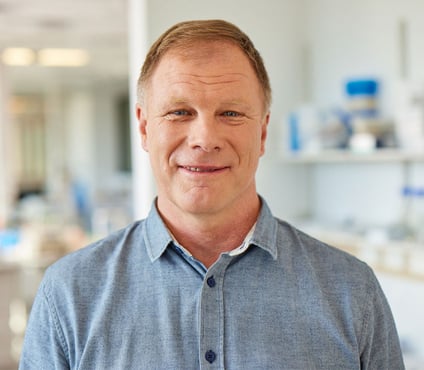
At Garvan, Professor Robert Brink, who leads Garvan’s Immune Biotherapies Program, is using CRISPR to develop new therapy approaches for rare genetic immune and blood diseases.
What is gene editing?
The DNA from only a single cell contains your entire ‘genome’ – all the genetic instructions for you to grow, develop and function. These genetic instructions are encoded in 6 billion letters of DNA across 46 chromosomes that we inherit from our parents – 23 from each parent.
Instead of the 26 letters in the English alphabet, DNA consists of four letters – A, C, G and T. In some cases, even a single letter change, or variant, can cause the entire set of instructions to be misread, which can change the molecules your body produces and the way your body functions.
Gene editing means changing one of those genetic instructions. This can include adding or deleting a gene, turning a gene on or off, or correcting a damaging variant that is causing the gene to be misread. Correcting damaging variants through gene therapy could be the key to curing some of the most hard-to-treat diseases.
While researchers have been editing genes in the lab for decades, until recently, the only approaches were inefficient and often missed their genetic targets, making the gene editing process long and expensive.
Enter CRISPR gene editing
What if you could cut and paste genes like words in a document? That’s the promise of CRISPR (short for Clustered Regularly Interspaced Short Palindromic Repeats), a molecular scissor that precisely snips DNA at targeted locations. To adapt this mechanism into a powerful genome editing tool, scientists design an ‘address’ to guide the DNA-snipping Cas9 enzyme to specific genes, where they can make precise changes – disabling a gene or correcting a mutation.
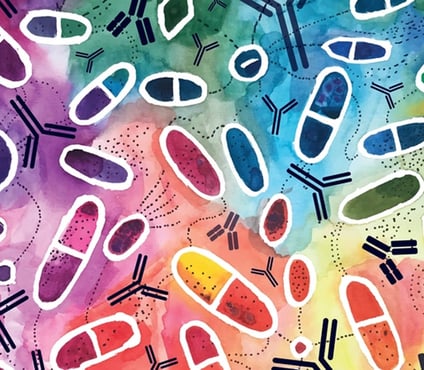
Remarkably, CRISPR wasn’t dreamed up in a lab – it was evolved by single-celled organisms to protect themselves from invading viruses. “CRISPR is actually part of a bacterial immune system,” explains Professor Brink. “Bacteria found a way to recognise the DNA of invading viruses and send the Cas9 enzyme to chop it into pieces. It’s extremely clever.”
CRISPR research at Garvan
Professor Brink and other researchers at the Garvan Institute have been using CRISPR gene editing to model rare genetic diseases – which have traditionally been expensive, slow and difficult to research, leaving patients with few answers or treatment options. “If we have patients with a single mutation that we think is responsible for their immunodeficiency, we can now introduce that exact change into mouse immune cells,” says Professor Brink. “We can then study the effects and test potential therapies.”
His team is now using it to develop a therapeutic approach that is urgently needed for children born with severe inherited immune disorders. Currently, the main avenue for treatment is a bone marrow transplant from a healthy donor. While this provides a functional immune system, the transplants come with side effects and patients face lifelong immunosuppression to stop their bodies from rejecting the donor cells.
“Using CRISPR, we are working on the therapeutic approach of taking a patient’s own stem cells from their blood or bone marrow, repairing the mutation in enough of these cells and injecting them back into the patient,” explains Professor Brink. “This would provide patients with their own working immune system, without transplant issues. For blood and immune disorders, that’s the dream – and we believe it’s around the corner.”
Building on this vision, Professor Brink’s team is ambitiously targeting more than 300 conditions, including sickle cell anaemia and b-thalassaemia, and a large number of immunodeficiency and inflammatory disorders that primarily affect children, such as haemophagocytic lymphohistiocytosis, chronic granulomatous disease, several types of severe combined immunodeficiency, and antibody deficiencies like X-linked hyper-IgM and agammaglobulinemia.
The final frontier, says Professor Brink, is editing genes inside the body. “Ultimately, it would be ideal to deliver CRISPR to a patient’s bone marrow to correct stem cells in place, without the need to extract cells, making the process less invasive and more accessible,” says Professor Brink. “That’s further off, but it will happen.”
One challenge has been how to get the CRISPR system exactly where it’s needed in the body. His team has developed a method using virus-like particles (a non-infectious virus derivative) to efficiently deliver the CRISPR system into bone marrow stem cells, precisely repairing mutations without off-target side effects. They are now collaborating with clinicians at St Vincent’s Hospital Sydney to validate the approach in human cells.
In 2023, the first CRISPR therapies were approved for sickle cell anaemia in the US, with more in clinical trials for blood disorders. With advances in gene editing technologies, Professor Brink predicts we’ll see more and more genetic diseases become treatable.
For him, one of the most fascinating aspects of CRISPR remains its origins: “The fact that we’ve learned how to create a powerful therapeutic tool from a bacterial defence system shows how much we still have to learn from nature.”