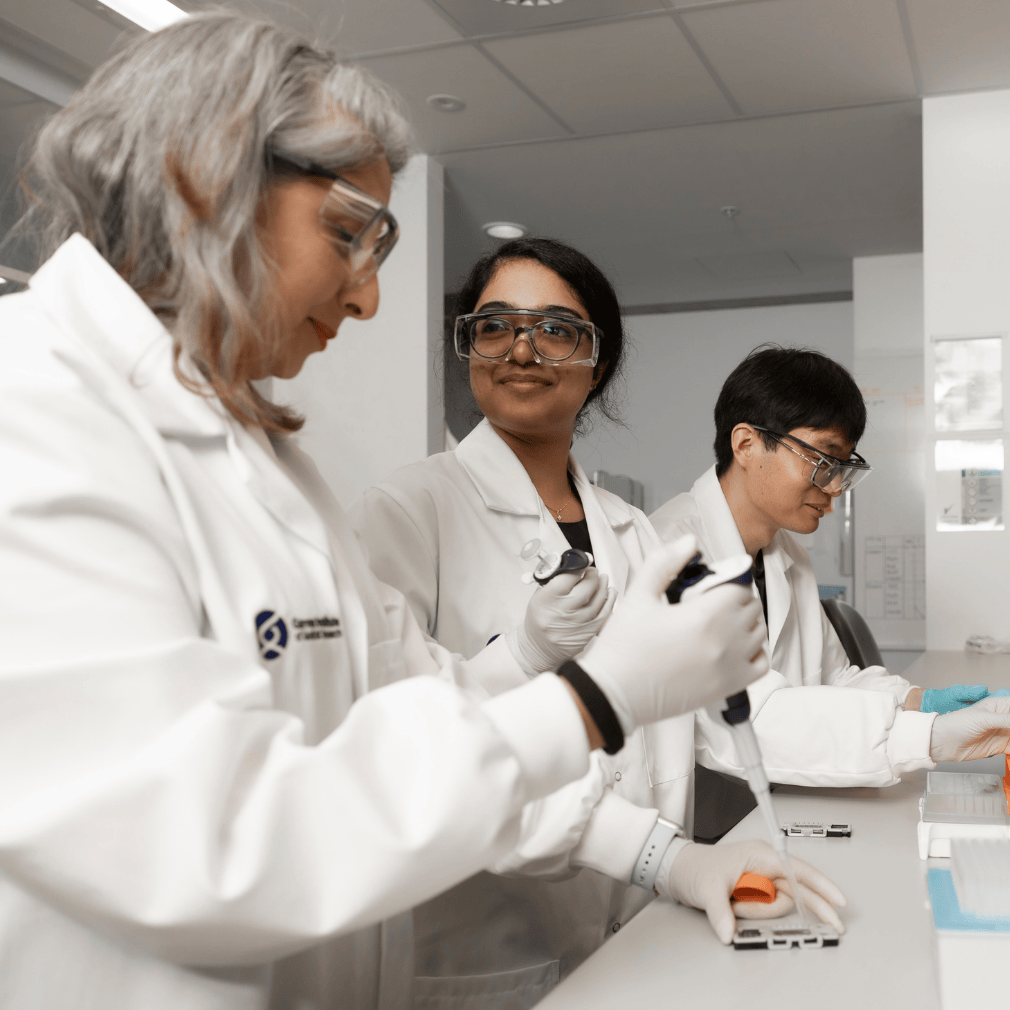
After her father was diagnosed with Alzheimer's disease, Daphne volunteered for a Garvan-led dementia and cognition study, hoping to contribute to research while learning more about her own risk. Instead, an MRI conducted as part of the project revealed something no one was expecting.
She received a phone call urging her to see a neurologist and, shortly afterwards, was diagnosed with multiple sclerosis (MS), an autoimmune disease that affects the brain and spinal cord.
"It came as a huge shock," she says. "I cried for three days. But then I decided to just get on with it."
For the former marketing consultant, life suddenly felt too short to waste. Fascinated by archaeology, anthropology and different cultures, travel took on a new significance. She embraced every opportunity to explore, journeying through Africa, the Middle East and Asia, with South America and the south of Japan next on her growing list.
"I just want to see as much of the world as I can," she says.
Determined not to let her condition narrow her life, Daphne also began to think about the legacy she wanted to leave.
Long before her diagnosis, Daphne had admired Garvan's work, attending public lectures and following the Institute's discoveries. What impressed her most was not only the breadth of the research, but the dedication of the people behind it.
"It's not just a job to the researchers," she says. "It's a passion."
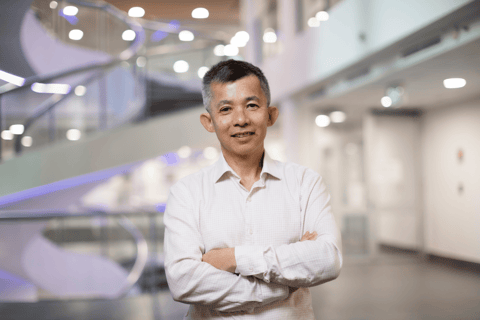
Professor Tri Phan, Director of the Precision Immunology Program at Garvan and scientific lead of the Open Coast-to-Coast Australian Multiple Sclerosis (OCCAMS) consortium, says that passion and shared commitment is now driving efforts to stop MS before it starts. By bringing together neurologists, geneticists and clinicians from across the world, the consortium is working to uncover the earliest biological changes that drive the disease.
"The dream we all share is that maybe one day we'll be able to eradicate MS, in the same way we've been able to eradicate smallpox, by mobilising the power of the immune system,” says Professor Phan.
For Daphne, it’s exactly the kind of ambitious research she wants to support. So when she updated her Will, becoming a Garvan Partner for the Future felt like a natural decision.
"Garvan was very, very high on my list because of the incredible work that's done there," she says. "I don't know that there's any other institution that comes close to doing what they do."
Today, fatigue, pain and numbness are part of everyday life, but Daphne refuses to let MS shape what's possible. Through her future gift, she hopes to help Garvan’s researchers answer the questions that still surround the disease and, ultimately, prevent it altogether.
For Daphne, it's a way of helping others spend less time fearing disease and more time dreaming, exploring and living life on their own terms.
“It’s a very confounding and confusing disease,” she says. “But if researchers could stall its progression or prevent it all together, what a miracle that would be.”
Listen to our Medical Minds podcast
Ways to support Garvan

Leave a gift in your Will
Make a donation
Fundraise for us